

A new energy modality built for the challenge of VT
SERF is not an incremental improvement to conventional RF.
It is a new approach to energy delivery, specifically designed to reach the deep substrate that drives ventricular tachycardia. SERF technology uses Saline-Enhanced Radiofrequency energy to treat ventricular tachycardia in a fundamentally different way.
Unlike conventional RF ablation, which heats tissue from the surface of the heart wall, SERF is designed to deliver energy as deep into the ventricular myocardium as needed.

Why conventional RF is limited
VT is often driven by abnormal electrical circuits located deep within scarred ventricular tissue, commonly following a heart attack or other structural heart disease.
Traditional RF uses only thermal conduction to carry heat within the myocardium, which can result in:
Shallow lesions
Incomplete treatment of intramural substrate, especially in scarred tissue
Overheating near the electrode before deeper tissue is reached
These limitations contribute to long procedures and recurrent VT.
How SERF works
Controlled: heat you direct, not heat you hope for
SERF uses active thermal convection.
During ablation, RF energy is delivered while heated saline is infused directly into the tissue. The saline carries heat deeper and more uniformly through the myocardium.
That changes what lesion size depends on. With conventional RF, size is an outcome of contact, thickness and scar. With SERF, it is a setting.
This enables:
Controlled lesion volumes
Larger lesion volumes
Greater depth of penetration, including transmural whenever necessary
More uniform thermal dosing
More efficient treatment of ventricular substrate
Right-sized: the full range under your control
SERF creates lesions of the size that physicians need, and it creates full-thickness lesions whenever required. The lesion volume is programmable and reliable.
In preclinical studies, lesion dimensions were reproducible to within 15%, including in scarred tissue.
Cleaner: less material released into circulation
Two design choices reduce what an ablation leaves behind. RF energy is delivered within the muscle rather than at the blood-tissue interface, and the saline is degassed before infusion.
In a porcine model, SERF produced measurably less embolic material, both particulates and microbubbles, than conventional RF ablation.
These are preclinical findings and the clinical significance has not been established.
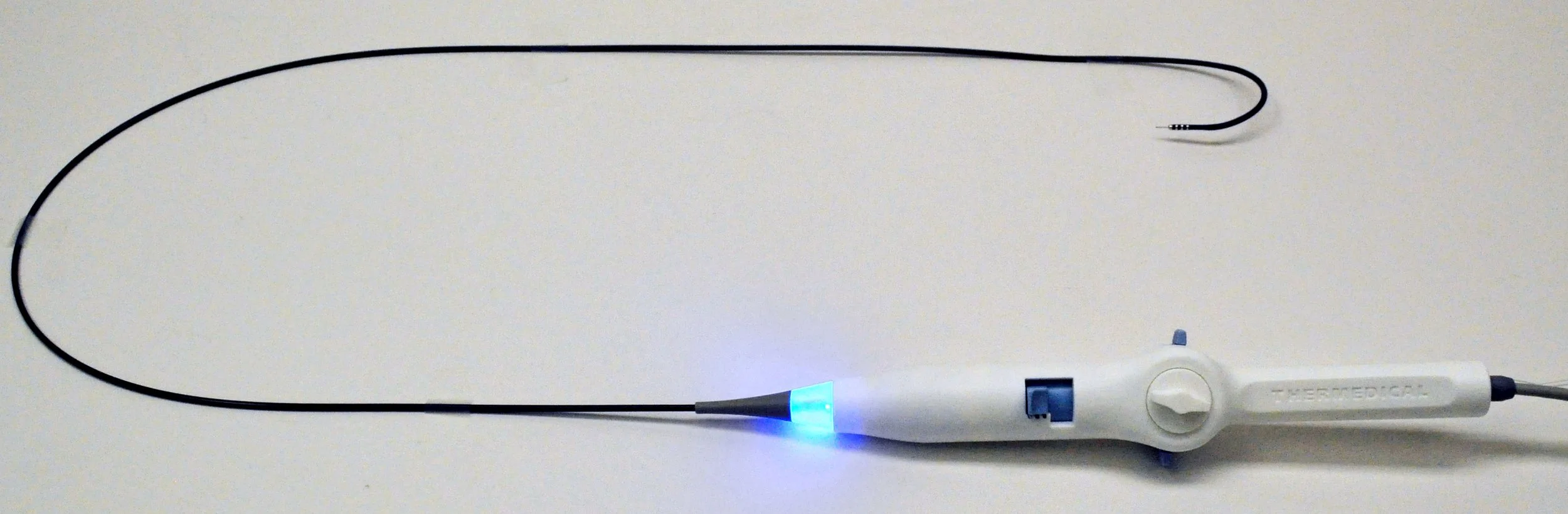
The Durablate® catheter
Thermedical is developing the Durablate® catheter for VT.
Durablate uses an endocardial approach with a retractable needle electrode that enters the myocardium, allowing SERF energy to be delivered from within the scar rather than only from the surface.
This design is intended to create deep, potentially transmural lesions in the targeted ventricular tissue.
FDA-approved clinical trial
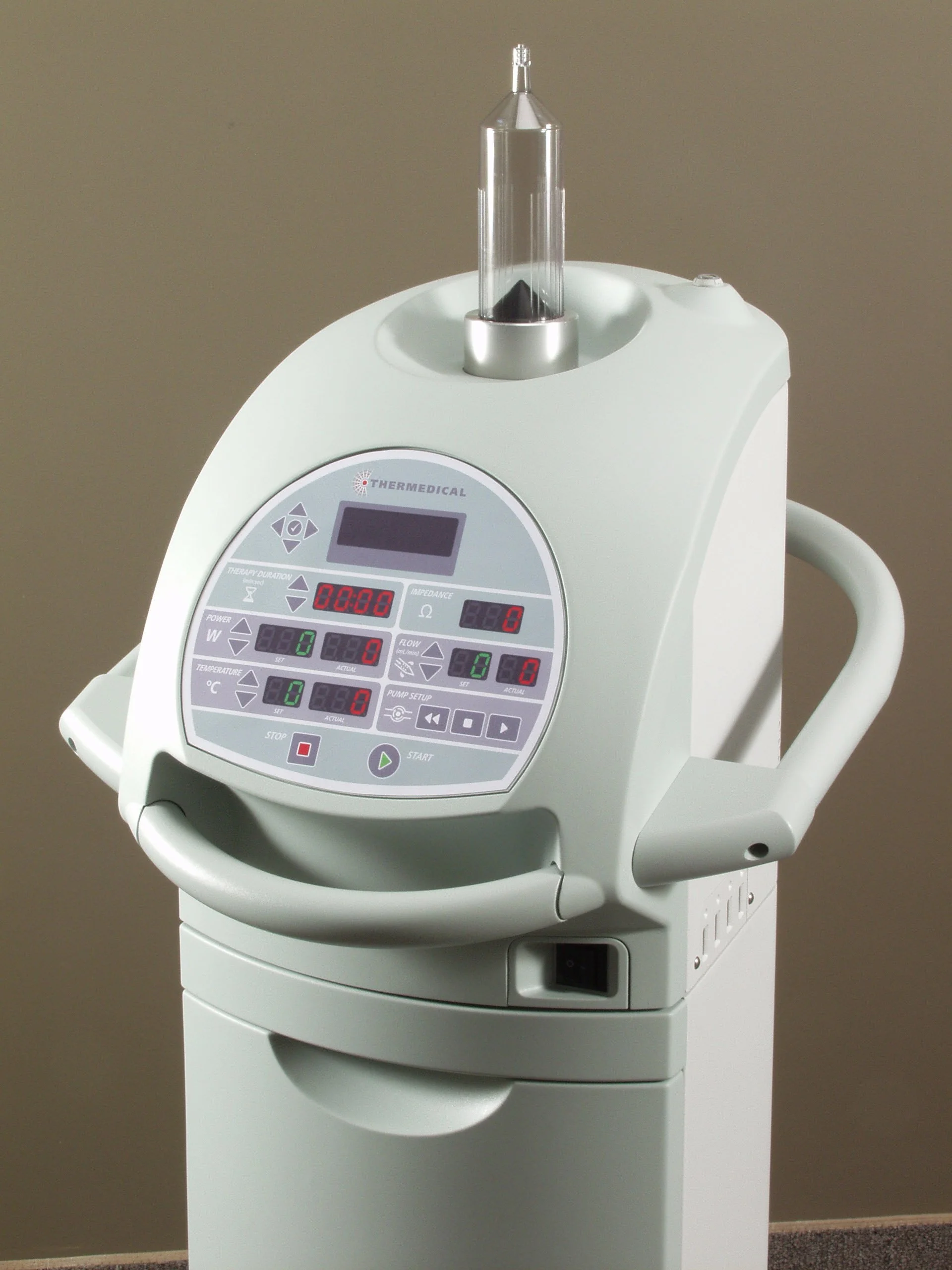
Use of the Thermedical Ablation System and the Durablate ®Catheter for the treatment of refractory VT is investigational and has not been approved for use or sale in any market.
They are currently being evaluated in an FDA-approved clinical trial NCT05337241.